
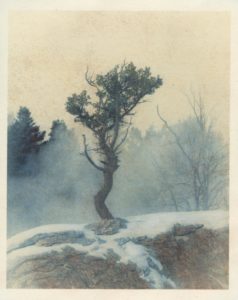
The Process
I was inspired to try alternative and historic photographic techniques in a an introductory class from Eileen Rafferty. She offers these classes in the spring and fall. Check them out at www.eileenrafferty.com. Since then I have delved ever deeper into a variety of techniques with workshops at the Photographer’s Formulary in Condon. Not only do they supply all the chemicals necessary for these processes, they offer amazing workshops every summer with accomplished teachers. Next summer’s workshops are available at www.workshopsinmontana.com. This particular project grew out of class I took last summer from Christine Z. Anderson, a photography professor from MSU (who wrote the book on Gum Printing).
Gum produces one of a kind original prints. It is the most painterly of the alternative processes and therefore seemed like a perfect match to my Yellowstone project which was inspired by the early painters like Moran and Hill. While very labor intensive, and given the multiple opportunities to make mistakes, it is also by far the most creative and just plain fun.
Each print goes through a series of steps to achieve a full color photograph. I begin by creating 3 digital negatives for each photo, one cyan, one magenta and one yellow. Both Gum and Cyanotype are contact printing processes where the negative is placed over the emulsion coating and exposed to UV light. No need for an enlarger, or a dangerous chemical developer as they both are developed in plain water.
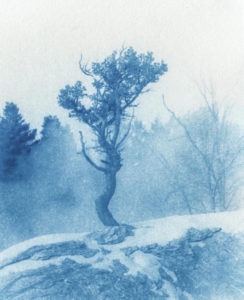
I used Cyanotype as my base blue layer. It creates a slightly sharper image and helps define the details. Cyanotype was “discovered” by English scientist John Frederick William Herscheel in 1842 and was one of the very earliest of the photographic processes. Cyanotype uses a mixture of two chemicals: ferric ammonium citrate and potassium ferricyanide. The mixture is coated on a piece of paper, an object or a negative is placed on top and it is exposed to UV light.
Now layers of color are added over the cyanotype using the gum dichromate process. Gum printing was developed in the 19th century as a way to create prints with color. By 1853 William Henry Fox took out a patent in “photoglyphy” after realizing that dichromate would harden gelatin under sunlight.
The gum layers are added to the cyanotype by brushing on a mixture of gum Arabic tinted with watercolor pigment and ammonium or potassium dichromate. The light sensitive dichromate hardens the gum Arabic in proportion to the amount of light received. The excess gum washes off in a water bath.
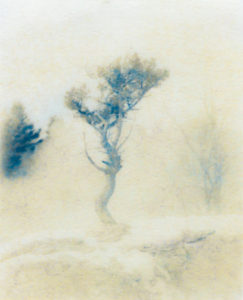
The first gum layer I added was yellow.
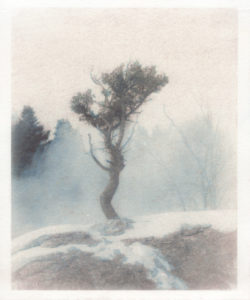
Next a layer of red is added. This creates a “full color” picture. From here a decision is made whether or not to add other layers to tweak the color, and if one wants it to reflect the original, or diverge from it. On this image I thought it needed one more layer to really make it pop and give it a more historic and painterly appearance.
I added a layer of burnt sienna, using the blue negative to get the final print. This echoed the palette of the early handpainted photographs and postcards.
Each print in the Conjuring Color portfolio was created with an individual layering of color, depending on the look that I wanted to achieve.
[ngg src=”galleries” ids=”14″ display=”basic_thumbnail”]
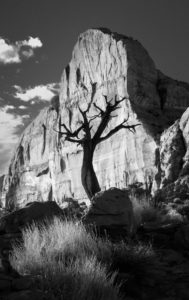 In May I attended the final Moab Photography Symposium. For the last three years I can honestly say the experience, combined with the Terrific Trio workshop in the three days leading up to the larger gathering, has changed my life. I have been “studying” photography for the last 10 years or so–learning my f-stops and depth of field and composition and photoshop techniques. But on my first Terrific Trio workshop with Guy Tal, Bruce Hucko and Colleen Miniuk Sperry, I learned what it is to create art with my camera.
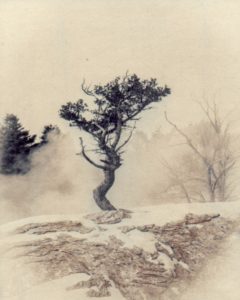 Several years ago I did a workshop with
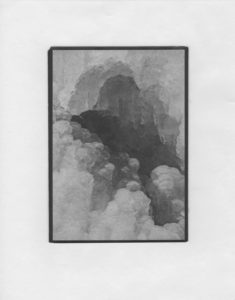 The last two weeks in Missoula have been unrelentingly cold with inversions trapping the valleys under a veil of dismal grey. For many people this has been trying–particularly since we are all breathlessly waiting for snow and the beginning of ski season. But the photographer in me has been rejoicing because the fact that the daytime temperatures never rise above the mid-20s means that the pond and riverbank have been an ever-changing landscape of ice. The fascinating forms captured by the freezing water are artworks far surpassing what my own imagination could ever conjure up.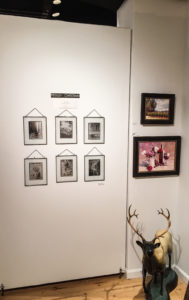
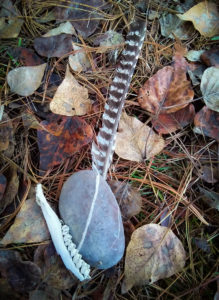 “Talk of mysteries—Think of our life in nature,–daily to be shown matter, to come in contact with it,–rocks, trees, wind on our cheeks! The solid earth! The actual world! The common sense! Contact! Contact! Who are we? Where are we? H.D. Thoreau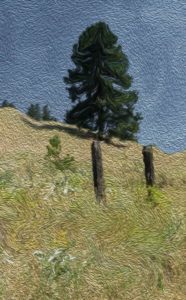
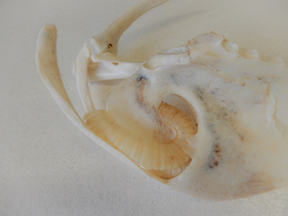
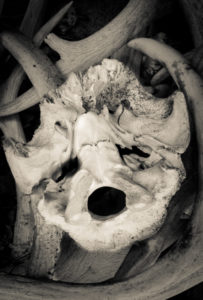
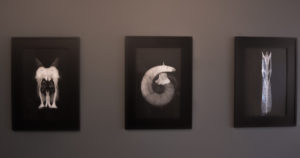
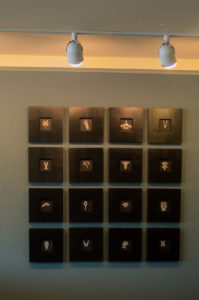
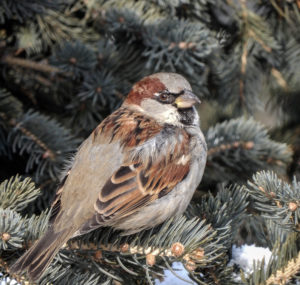
 Wunderkammer (Cabinet of Wonders)
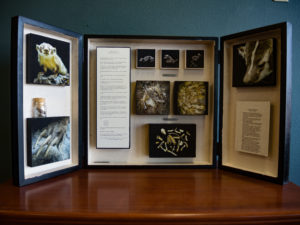 Articulating a Story
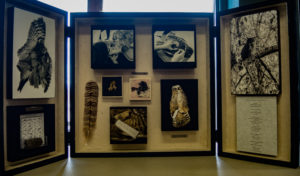 Haunted by Owls
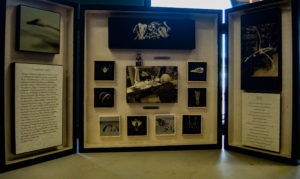 Swan Song